Why an Irish Pub NYC Hangout Never Goes Out of Style

There are trendier places to spend an evening in New York. There are louder rooms, sleeker cocktail menus, more theatrical interiors, and reservation books packed with people chasing the latest thing. Yet year after year, when plans fall apart, birthdays need saving, a workday runs long, or a Saturday suddenly opens up, people still end up at the same kind of place: the neighborhood Irish pub.
That staying power is not an accident. The classic Irish Pub NYC crowd favorite has endured because it solves a problem that many modern venues create. It gives people somewhere to gather without fuss. You do not need a strategy to enjoy it. You do not need to dress for the room, study the menu in advance, or commit to a whole night before the first round arrives. You can come in alone, with one friend, with eight coworkers, with family from out of town, or after a game, a show, a wake, a first date, or no occasion at all. The room makes space for all of it.
People often talk about Irish pubs as if nostalgia alone keeps them alive. Nostalgia plays a role, of course. Dark wood, brass rails, framed photos, a good Guinness pour, and a bartender who remembers your usual all have emotional pull. But the better explanation is more practical. These pubs work. They work socially, logistically, financially, and culturally. In a city that changes by the month, that kind of reliability becomes more valuable, not less.
A room built for real life
New York has no shortage of bars, but not all bars are useful. Some are optimized for scene, some for speed, some for spectacle. An Irish pub, especially a well-run one, is usually optimized for human comfort.
That distinction matters more than people admit. A lot of hospitality design today revolves around concept. The lighting is engineered for mood, the menu is engineered for social media, the soundtrack is engineered to tell you what kind of place this is. At an Irish pub, the design tends to serve a simpler goal: let people sit down, hear each other, get a proper drink, and stay awhile if they like.
It sounds basic until you spend enough time in New York trying to meet friends in places that forgot the point of going out. If the stools are too low, the music is too sharp, the tables are too tiny, and every cocktail requires a four-minute explanation, the room stops helping and starts getting in the way. An Irish pub rarely makes that mistake. Even the busy ones understand traffic flow. There is often standing room that feels natural rather than chaotic, bar seating that invites conversation, and enough table space for food, pints, and the extra guest who joins late.
That physical ease is part of the style’s endurance. People return to places where they can settle in.
The democratic charm of the good pint
One reason the Irish pub format keeps winning is that it remains approachable. In New York, approachable is not a small thing. Plenty of venues send signals, subtle or not, about who belongs there. Price point does that. So does dress code, music volume, reservation policy, and staff attitude.
A solid Irish pub usually lowers those barriers. You can walk in wearing office clothes, jeans, a winter coat over gym gear, or a suit after a wedding. Nobody needs to perform expertise. If you want a whiskey, a lager, a stout, or a burger, you are in safe hands. If someone in the group wants something simpler, like a club soda and fries, that person is not treated like dead weight.
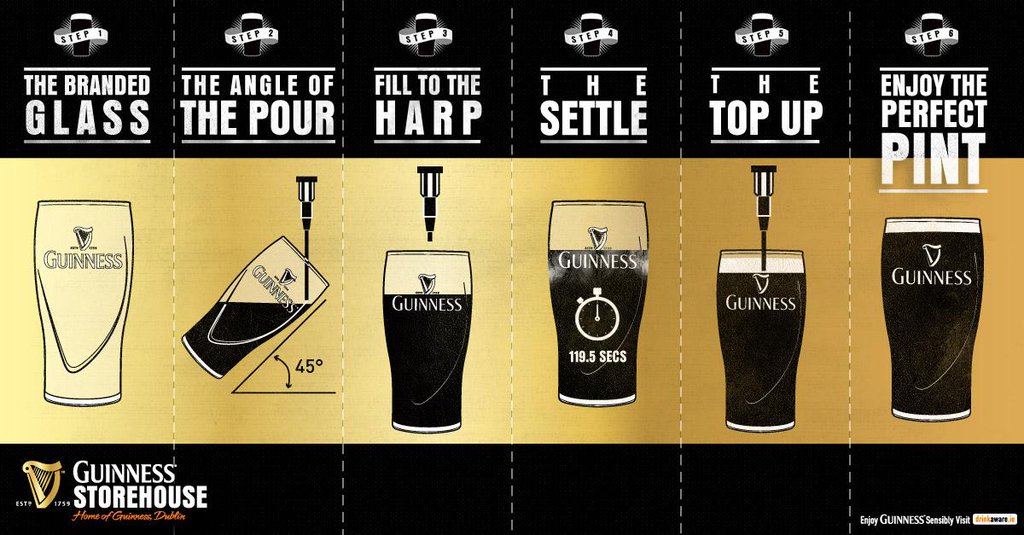
The pint itself carries some of that democratic appeal. Beer service in an Irish pub is less about novelty and more about consistency. A well-kept stout or ale is satisfying in a way that feels grounded. The pleasure is in the pour, the temperature, the glassware, the patience. A bartender who knows how to settle a Guinness, top it properly, and set it down with quiet confidence is practicing a form of hospitality that regulars notice immediately. It is not flashy, but it is exacting.
That matters in a city where many people are tired of being sold an experience. Sometimes what people really want is a good drink, served right, in a room that does not demand anything from them except presence.
Why the atmosphere ages so well
Styles date quickly in New York. Minimalism can feel sterile within a few years. Maximalism can tip into parody just as fast. The beauty of the Irish pub is that its visual language already assumes wear, history, and accumulation. Scuffed wood, old mirrors, a little tarnish on the brass, a wall full of memorabilia, these details often improve with time rather than suffer from it.
That is a powerful advantage. A place that looks better as it ages can become part of a neighborhood’s memory. People return to it across chapters of their own lives. They remember where they sat after a job interview, where they watched a World Cup match, where they met someone who later became a spouse, where they toasted a promotion, where they hid from February rain with a bowl of stew and a second pint.
Very few hospitality formats carry that kind of emotional durability. The Irish pub does because it allows layers to build. It does not need reinvention every season. If ownership is steady and standards stay high, the room becomes richer with repetition.
I have seen this firsthand in New York bars that are busy for reasons no marketing team could replicate. At six o’clock they fill with office workers unwinding. By eight, neighborhood couples and small groups take over. Later on, a younger crowd arrives, plus tourists looking for a place that feels recognizably New York without being inaccessible. On a Sunday afternoon the same room might host families, soccer fans, and regulars reading the paper near the front window. Very few spaces can hold all those uses credibly. The Irish pub can.
Food that understands the assignment
A pub does not need a giant menu to stay relevant, but it does need to feed people properly. That is another reason the model persists. When people are deciding where to meet, practical questions come up fast. Can we eat there? Will there be something for everyone? Is it substantial enough that we are not hunting for pizza an hour later?
The best Irish pubs answer yes without making food the entire storyline. Their menus tend to be built around dishes that travel well from lunch through late evening: burgers, fish and chips, shepherd’s pie, bangers and mash, salads, wings, soups, sandwiches, and rotating comfort specials. In New York, where a single group often includes one person who wants a full meal, one who only wants a snack, one vegetarian, and someone arriving two hours late, that flexibility is not glamorous, but it is essential.
Comfort food also pairs naturally with drinking. This sounds obvious, but many bars treat food as a legal requirement instead of part of hospitality. A pub kitchen that sends out crisp fries, hot soda bread, rich stew, or a genuinely good chicken sandwich keeps people in their seats and in a better mood. It stabilizes the night. It turns one round into three, a casual meet-up into dinner, a stop-in into a habit.
No one needs every meal to be a revelation. In fact, most people prefer reliability when they are gathering with others. A pub that serves generous, competent food earns repeat business because it reduces risk. You know what kind of night you are going to have, and that predictability is a luxury in New York.
A social format that fits the city
New York social life is famously fragmented. People live in different boroughs, work long hours, keep uneven schedules, and often make plans in layers. One friend can stay out until midnight, another has to leave by nine, a third is already nearby, and a fourth is coming from uptown with no promise on timing. The ideal meeting place has to absorb those complications.
This is where the Irish Pub NYC staple shines. It handles partial attendance better than almost any other venue. If two people arrive early, they can start at the bar. If the group grows, someone can usually find a table or combine one. If the kitchen is still open, late arrivals can eat. If half the group only wants one drink, nobody resents the commitment. There is room for drift, which is how real city plans actually work.
Contrast that with more rigid nights out. Tasting menus demand punctuality. Cocktail bars with limited seating punish latecomers. Clubs require a shared appetite for noise and duration. Trend restaurants often lock everyone into a singular agenda. A pub is forgiving. That forgiveness is a major part of its appeal.
The same flexibility makes Irish pubs useful for milestones people do not want to overproduce. Not every birthday needs bottle service. Not every reunion needs a private dining room. Sometimes a dozen people need a place where conversation can move around, tabs can stay separate, and no one feels rushed. The classic pub setup accommodates that better than almost any format in the city.
The bartender still matters
Ask regulars why they return to a particular pub and you will hear about the bartender sooner rather than later. This is not sentimental exaggeration. The bartender is the engine of a good pub, especially in New York, where the best ones can read a room in seconds.
They know when to talk and when to leave people alone. They know who wants another round before being asked. They know how to pace service on a packed Friday without making anyone feel invisible. They know when a newcomer needs guidance and when a regular needs exactly the usual, nothing more, nothing less.
In a polished lounge, service often aims for seamless anonymity. In a pub, familiarity is part of the product. Not overfamiliarity, not forced banter, but recognition. That human continuity gives the room its emotional center.
Over time, this can become one of the last forms of low-stakes community left in the city. People who would never exchange more than a nod on the sidewalk end up talking at the bar. Office workers, teachers, firefighters, musicians, retirees, visiting cousins, and recent transplants all occupy the same social field for an hour or two. You cannot manufacture that with branding.
Good pubs understand this and protect it. They hire people who can handle volume while preserving warmth. They avoid turning every shift into transactional churn. They let staff personalities shape the room. That choice pays off.
Sports, music, and ritual without overproduction
Another reason Irish pubs stay relevant is that they host communal rituals well. Sports are the obvious example. Whether it is a Premier League morning, a Six Nations match, college football, or playoff baseball, a pub can gather people around a screen without making the event feel commercialized beyond recognition.
That balance is harder to achieve than it looks. Too little energy and the room is dead. Too much and it feels like a sports book with wings. The better pubs strike a middle line. The game matters, but so do the people watching it. The televisions support the room rather than dominating it.
Live music can work the same way. In the right pub, a trad session, a singer with a guitar, or a band in a back room adds life without hijacking the evening. The atmosphere grows fuller, not louder for its own sake. Even holiday nights, when other venues become chaotic or aggressively themed, often feel more grounded in a pub setting. St. Patrick’s Day, of course, is its own category, but the places that matter most are usually the ones that still feel authentic on an ordinary Wednesday in November.
Ritual is the keyword here. People like places that can anchor recurring moments. A weekly quiz, a standing Friday pint, a post-softball meet-up, a family lunch after Mass, a December gathering before everyone leaves town, these repeat patterns give a bar relevance beyond novelty. Irish pubs are especially good at becoming ritual spaces.
They adapt without losing themselves
It would be a mistake to think the format survives by resisting change altogether. The best Irish pubs evolve, but they do it selectively. They might improve their whiskey list, modernize draft systems, add stronger coffee service for daytime traffic, or update the food menu to reflect current tastes. They might make room for craft beer without becoming a taproom, or offer better nonalcoholic options without turning the place into a wellness performance.
That selective adaptation is part of why they remain viable. New York diners and drinkers are more informed than they used to be. They notice stale menus, poor pours, weak service standards, and neglected interiors. A pub cannot coast on shamrocks and dark wood alone. It has to deliver.
At the same time, overcorrection can ruin the core identity. Once a pub starts chasing every trend, it often loses the easy confidence that made it appealing. The room becomes self-conscious. Prices climb. https://andyjhcr014.novacrestiq.com/posts/irish-pub-nyc-destinations-for-laid-back-social-nights Menus become cluttered. Music gets louder. Suddenly the place no longer feels like a refuge from the city’s constant reinvention. It feels trapped inside it.
The pubs that last understand what not to change. They preserve the rhythm of the bar, the warmth of the welcome, the seriousness of the pint, and the usefulness of the food. Everything else is negotiable.
Why tourists and regulars can coexist there
Many New York venues struggle to serve both visitors and locals without alienating one or the other. The Irish pub tends to manage the mix unusually well. Visitors are drawn to them because they feel legible. You can walk in without prior knowledge and understand the room quickly. Locals return because familiarity does not have to mean boredom. A place can remain welcoming to outsiders while still being woven into neighborhood life.
This balance depends on execution. If a pub leans too hard into tourism, regulars drift away. Prices creep up, service gets rushed, and the room becomes a backdrop rather than a living establishment. But when management stays disciplined, visitors can actually contribute useful energy. They keep the room dynamic. They bring stories, accents, curiosity, and occasional chaos of the harmless sort. Meanwhile, regulars give the place its spine.
In Manhattan especially, where foot traffic changes by block and by season, that combination can sustain a business through the whole year. The after-work crowd, the weekend crowd, the game-day crowd, and the tourist crowd all overlap just enough. A pub that can welcome each without pandering to any single one is built to last.
The economics of value
People rarely discuss style without eventually running into price. That is true here too. One reason the Irish pub remains a durable New York hangout is simple: it often feels like fair value.
Fair value is not the same as cheap. New York is expensive, and pub tabs can climb quickly, especially in central neighborhoods. But guests are usually measuring more than menu prices. They are measuring how long they can stay, how full they feel, how comfortable the room is, how flexible the evening remains, and whether the service justifies the spend.
A pub that delivers solid pours, honest food portions, and no-pressure pacing often comes out ahead in that mental math. People do not mind spending when they feel cared for and unhurried. They resent spending when they feel processed.
This is why some of the busiest pubs in the city are not the newest, prettiest, or most publicized. They simply offer a dependable exchange. You pay, and in return you get room to linger, food that satisfies, a drink that lands properly, and a setting that suits almost any social mood. That bargain has aged very well.
What people are really looking for
Underneath all the practical advantages lies a more personal truth. People keep coming back to Irish pubs because they offer a version of city life that still feels intact. Not polished into a concept, not optimized beyond recognition, not stripped of texture.
New York can be exhilarating, but it can also be exhausting. Schedules are crowded, apartments are small, and public space is often loud, rushed, or transactional. A good pub sits in the middle of that pressure and softens it. It gives people a place to exhale without opting out of urban life. You are still in the city, fully, but on more humane terms.
That may be the real reason an Irish Pub NYC hangout never goes out of style. It is not just a bar category. It is a social tool, a neighborhood anchor, and a dependable answer to a question New Yorkers ask all the time: where can we go that works for everyone?
The old answer still holds because it was always rooted in fundamentals. Comfortable room. Proper drink. Good food. Warm service. No unnecessary friction. In a city that keeps changing its surface, those basics never lose their value.
And when a place gets those basics right, people do what they have always done. They come back.
Hibernia Bar
401 W 50th St
New York, NY 10019, United States
Phone: +1 212-969-9703
FAQ About Irish Pub NYC
What is the best Irish pub in NYC?
The best choice depends on your location and preferred atmosphere. Hibernia Bar is a neighborhood Irish pub in Hell's Kitchen offering Guinness, Irish whiskey, pub food, and sports viewing.
Where do Irish people go in NYC?
New York's Irish community gathers in many neighborhoods and venues. Hibernia Bar welcomes Irish expats, local residents, and visitors at 401 W 50th St, just off Ninth Avenue.
Where can I watch GAA games in New York?
Hibernia Bar lists GAA among the sports it shows. Call +1 212-969-9703 to confirm coverage and opening times for a particular match before visiting.
What is the difference between a bar and a sports bar?
A sports bar emphasizes televised games and a shared viewing atmosphere. Hibernia combines sports viewing with the food, drinks, and hospitality of a neighborhood Irish pub.